


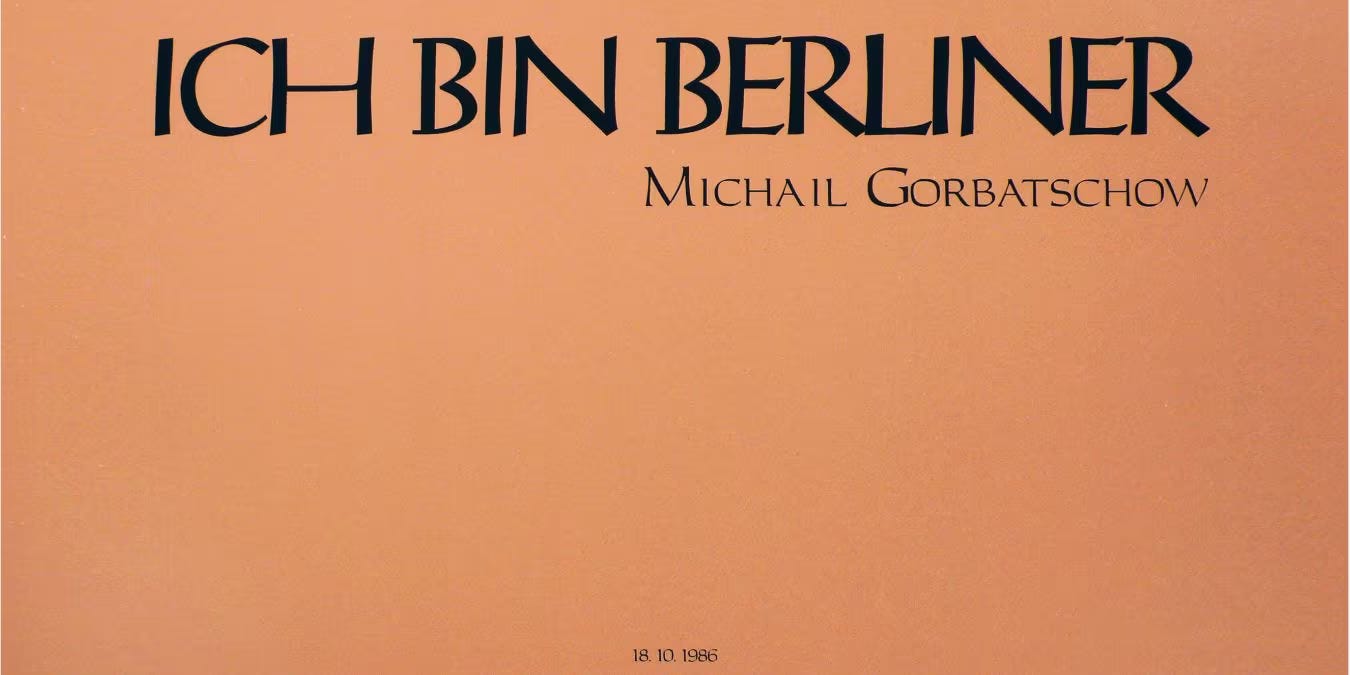
Entwurf für Ich bin Berliner, Michail Gorbatschow, 1986
Entwurf: Martin Mlecko, Vertreten durch: DOROTHÉE NILSSON GALLERY
This first recording is here to tune you into the time, the place, and the atmosphere of this tour.
The Berliner Festspiele comprise the Berlinale, the Musikfest Berlin, the Jazzfest Berlin, MaerzMusik, and the Gropius Bau. For the first time, on 5 September 1951, the Berliner Festwochen and the International Film Festival took place as two separate programmes, conceived as a “Schaufenster des Westens.” From a cultural-policy perspective, they were conceived at the height of the Cold War as two festivals that would serve as a cultural bridge between East and West.
An important point for a historical contextualisation is that 1951 was by no means yet the stable Federal Republic of the later 1950s. The political division was still recent, the German question remained unresolved, and the memory of the war and the Nazi dictatorship was still very immediate. The Berliner Festwochen and the International Film Festival in 1951, both held in West Berlin, can therefore be understood very well as expressions of the emerging Cold War and, at the same time, as an attempt to reconnect Berlin more strongly with the Western world. In this sense, they represented a kind of social new beginning after the Second World War. There was a necessity of spaces for cultural and artistic expression, but these space first had to be created in order to give expression to the period and to make encounters and rapprochement possible.
The international character of the festivals was particularly significant symbolically: Berlin was not merely to remain a destroyed former imperial capital, but was to become an open, international, cultural city.
This bridge becomes a central theme in the 75th anniversary of the Berliner Festspiele—not only throughout the programme as a whole, but above all in the S-Bahn tourWhat If. More below.


Images: left: Gabriele Stötzer, Die Auslöschung eines Blicks – Ich trage meine Wunden heute offen, 1983, Courtesy: LOOCK Galerie, Berlin, Foto: Heike Stephan © VG Bild-Kunst, Bonn 2026, right: Gabriele Stötzer by Micki Rosi Richter
Highlights we’d like to mentioned in that same political context, the exhibitions at the Gropius Bau in relation to the Berliner Festspiele by the two artists Marina Abramović, with Balkan Erotic Epic, and Stötzer, with Dabei sein und nicht schweigen (Showing Up and Not Remaining Silent) who have been extended until Sunday 30st August 2026.
“What If Berlin?”
Created specifically for the anniversary, What If Berlin? is an artistic project by Japanese artist Akira Takayama that explores unrealised ideas for Berlin.


image by Micki Rosi Richter
Takayama designed six different S-Bahn city tours along the 27 stations of the Ring. During these tours, some of the unrealised projects are introduced, together with ideas about how they might be reimagined and developed for the present day.
In times like these, the project offers a Schaufenster into a different period of Berlin’s history—one that can often feel very distant from the present. Yet, through the dedication and enthusiasm of the docents who share the stories associated with the individual stations, the project takes on a particular atmosphere and resonance. As a visitor you receive a truly immersive experience of the individual stations and their stories.'
‘What If’ offers new perspectives on the social conditions of the past, while also drawing attention to the symbolism of the city, buildings that have been lost, and cultural spaces that no longer exist. At the same time, the project recalls the original purpose of many of these cultural initiatives: to bring people together during difficult times and at moments of social and political transition.
2 Schönhauser Allee
House of Young Talents
From 1959 to 1991 the Haus der Jungen Talente (House of Young Talents, also known as the HdjT), originally a palace belonging to Count Heinrich von Podewil, was East Berlin’s biggest cultural centre for young people. Rock, jazz, folk music, cabaret and a computer club coexisted under the same roof and formed one of the city’s leading cultural programmes. Although the HdjT officially came under the auspices of the FDJ (Free German Youth), it operated as a space for autonomous civic culture – a place where everybody was free to enter and participate. Many youths and young adults spent their afternoons here, as well as evenings and some nights.
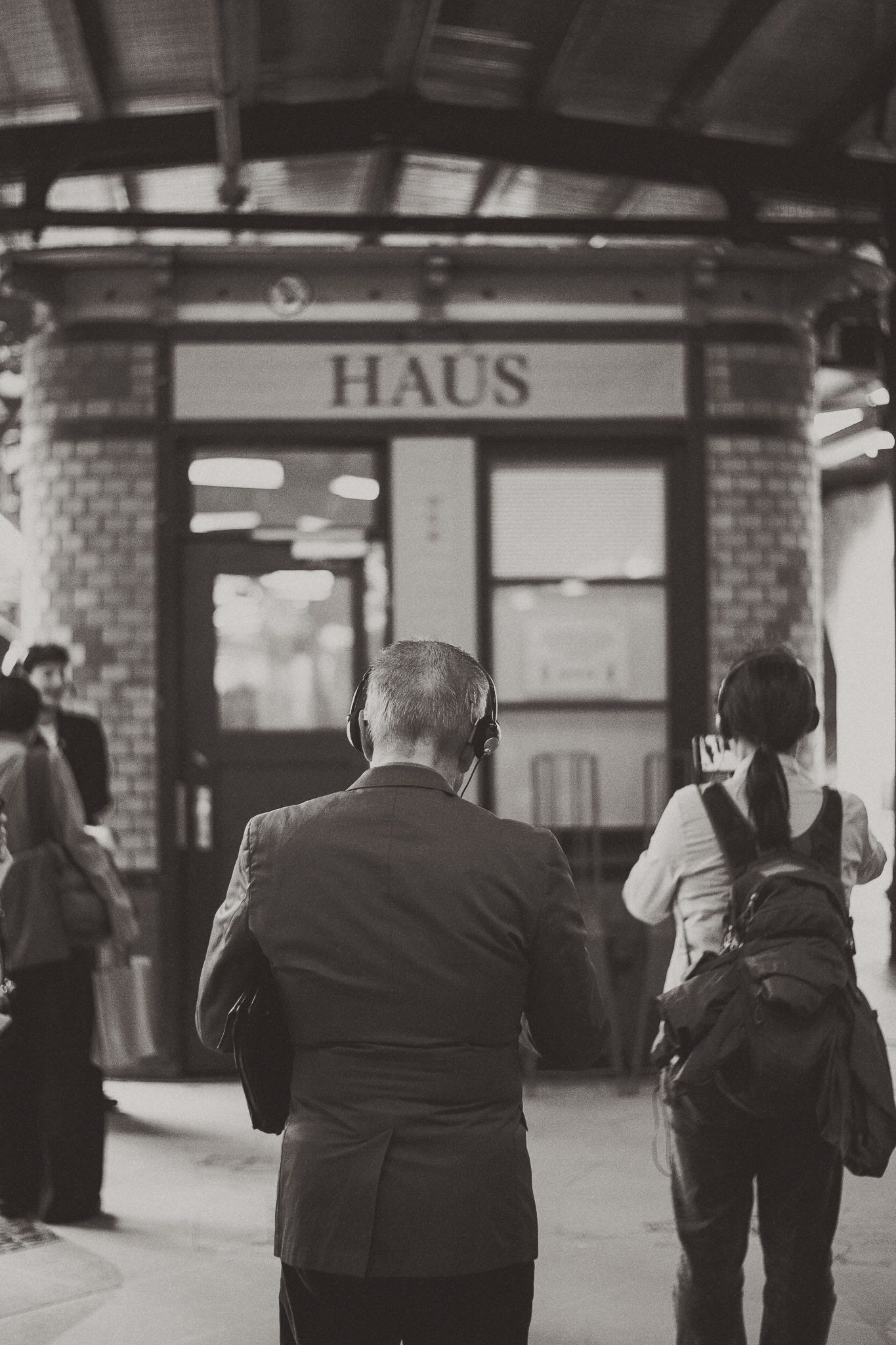
image by Micki Rosi Richter
4 Greifswalder Straße
When Communists Dream ...
Wenn Kommunisten träumen … (When Communists Dream…) is a large-scale oil painting (280×552 cm) by the painter Walter Womacka, which was created in 1975/76 for the Palace Gallery in the Main Foyer of the Palast der Republik in East Berlin. The Palace Gallery contained a total of 16 similarly large pictures by state-commissioned GDR artists who were tasked with representing their personal visions of a better future in visual form.
Following the demolition of the Palast der Republik at the beginning of the new millennium, the painting can now be found in the collection of the Deutsches Historisches Museum, where it is not accessible to the public – and it echoes Lenin’s question: “May Communists Dream?”
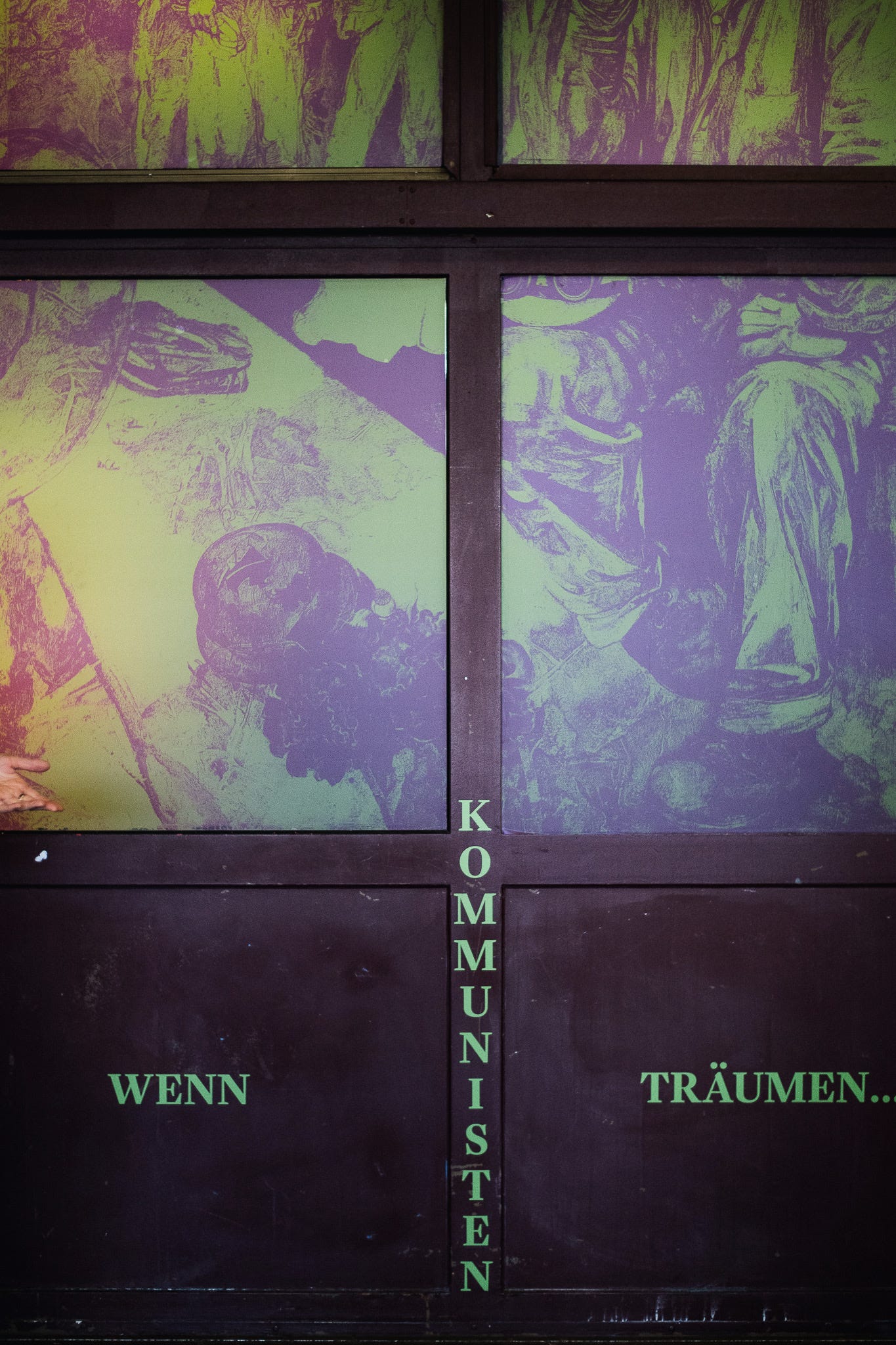
image by Micki Rosi Richter
Ikarusflug
Ikarusflug (Flight of Icarus) is an allegorical design by Christian Enzmann and Bernd Ettel from the year 1984 that the two architects presented as part of a competition to redesign the Bersarinplatz. Their plans consisted of a scenic, monumental street design with Potemkin façades that were intended to display the ideal of unity and power advocated by the GDR regime. However, behind these, a semicircular area revealed its concealed decay and provided a symbolic space for individual freedom of expression. The central element of the design was the art object Ikarusflug, which was intended to allow citizens to undertake their own attempts to fly to freedom, though before reaching their targets the flyers would be stopped abruptly by “state violence symbolised by laser cannons.”
Shortly after submitting their entry, the two architects – who were already under surveillance by the State Security Service following their illegal participation in an architecture competition in West Berlin – were arrested. Ettel was sentenced to 33 months’ imprisonment, while Enzmann received a sentence of 20 months. Ikarusflug can be seen as their “drawn manifesto” – a merciless image of complete surveillance, enforced conformity and the systematic destruction of individuality. At Bersarinplatz itself a standard prefabricated apartment block was constructed in place of their design.


Special Thank You to Micki Rosi Richter for documenting the tour for us in images.
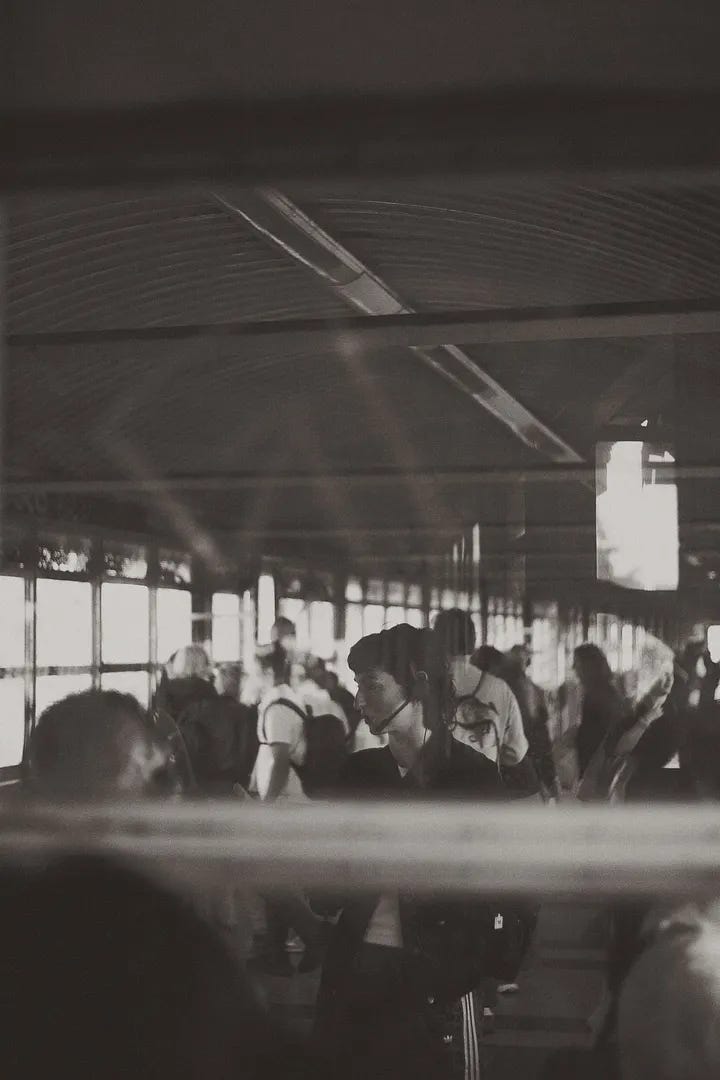
image by Micki Rosi Richter
Diana Rai (@_wrai) giving the tour
Tickets are available via the official Ticketshop here in this link. More info about the different houses and their programs via Berliner Festspiele’s website.
WEBSITE | INSTAGRAM | SOUNDCLOUD
Donate a penny or two and we can get a doughnut and tea while writing more :)