




I am curious how this text is going to come out because, so far, most of the column has been a bit more … allegorical and metaphorical than technical.
BASS.
There are two sides to the story of bass, at least for me. The technical and the narrative use of it.
But before you start reading: this publication and text is all written out of love, interest and joy. No money, no sponsors, all organic and original. Please consider subscribing to the channel, to make use of the algorithm.
I love the invisible pressure that bass brings.
In a club. In music. I love it as a cinematic hit, as an impact, as anything that shakes my core. Especially in an IMAX cinema, where my whole skeleton is vibrating from low frequencies. All my bones. The water in my body. The water in my ears.
I feel the world I am in.
Usually, when we talk about sound, we talk about hearing. Sound is acoustic information. Something happens, a sound reaches our ears, our brain interprets it.
What happens when sound goes beyond what my eyes can see or my ear decodes? When it becomes something my body understands before my conscious mind does, a bodily surface for storytelling?
Is the perfect sound bass as a storytelling tool?
As a sound designer, I am constantly thinking about how sound can communicate things that the image cannot. After seeing The Odyssey, I became particularly interested in their use of bass and the sound of the ocean.
Usually, I’d think of low end as a punctuation tool.
A cinematic impact, something that arrives when something obvious happens, a door slams, an explosion, something enormous enters the frame.
And this is where sound beneath the surface becomes really interesting as a storytelling tool. It makes me physically register that something bigger than me is approaching. It creates a feeling before anything has been explained to me.
This is where The Odyssey becomes such an interesting example.
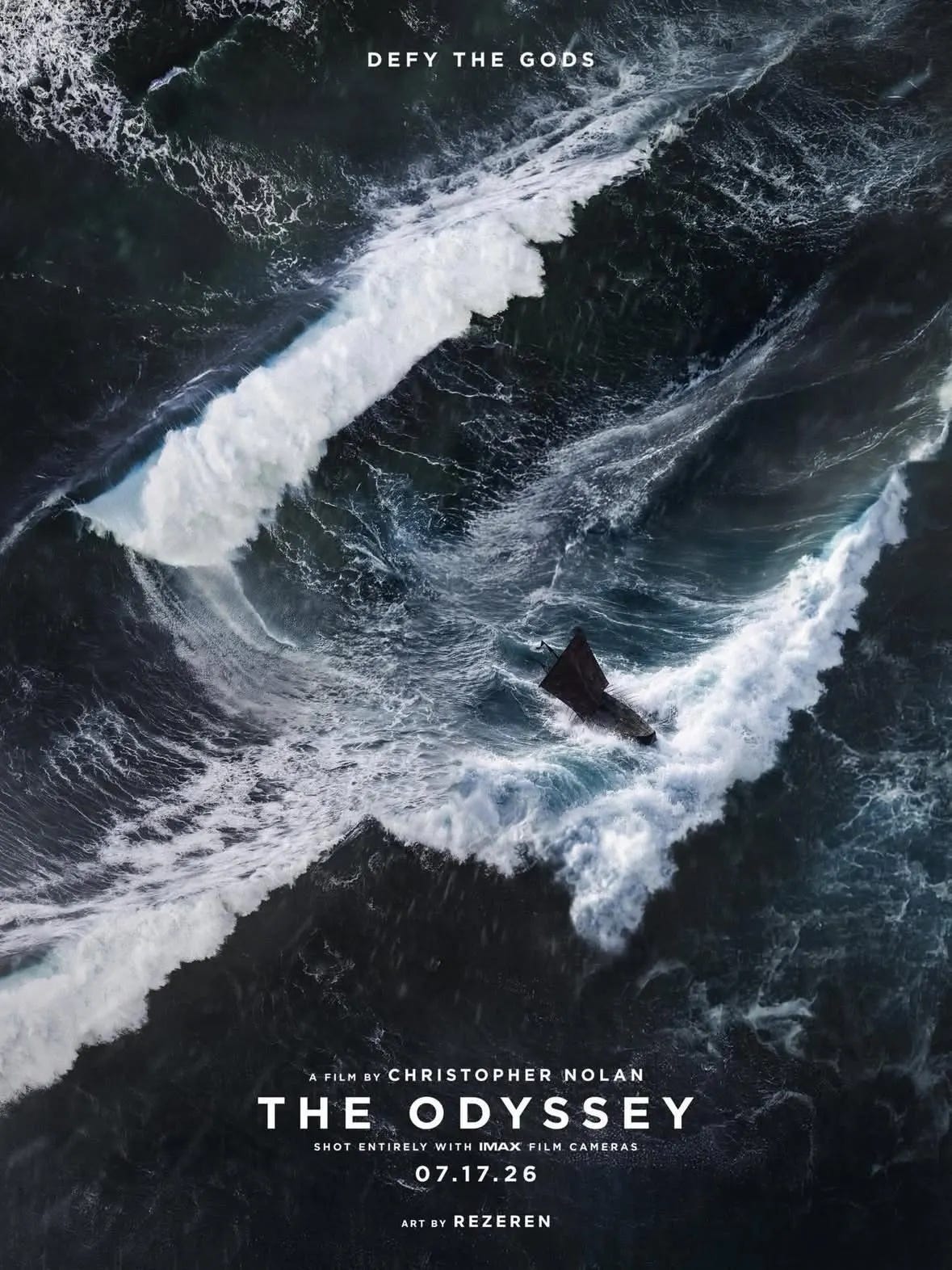
The story is full of human beings confronted by forces that are bigger than themselves.
The Gods.
The ocean.
Storms.
War.
Ships.
Caves.
Unknown places.
Monsters.
Forces of nature.
Odysseus, Penelope, Telemachus, and the other characters are constantly moving through a world they cannot control or understand.
The Odyssey can be read as a psychological metaphor for the inner self, the unconscious, and the journey towards personal growth. The ocean, vast and unpredictable, can represent the deep unconscious and the unknown depth of the human mind.
I am, in a way, the medium for my own subconscious mind…
…like the ocean underneath the surface.
And this is exactly where the ocean in The Odyssey becomes a metaphor. The ocean is more than water. It is a presence. Something huge that surrounds the characters and controls everything.
And a hidden sonic layer can give that presence a body.
A realistic ocean contains mostly white noise (when all frequencies are mixed together at the same time, it creates this noise), waves ebbing and flowing, sand movement, a continuous rhythm of relatively high frequencies. A sound designer could add a very slow, low movement below that.
A Sound Scene, in chronological order could look like this:
Silence → Wind → very low, barely recognisable low rumble → waves grow bigger → bass grows bigger and bigger → back to silence → release
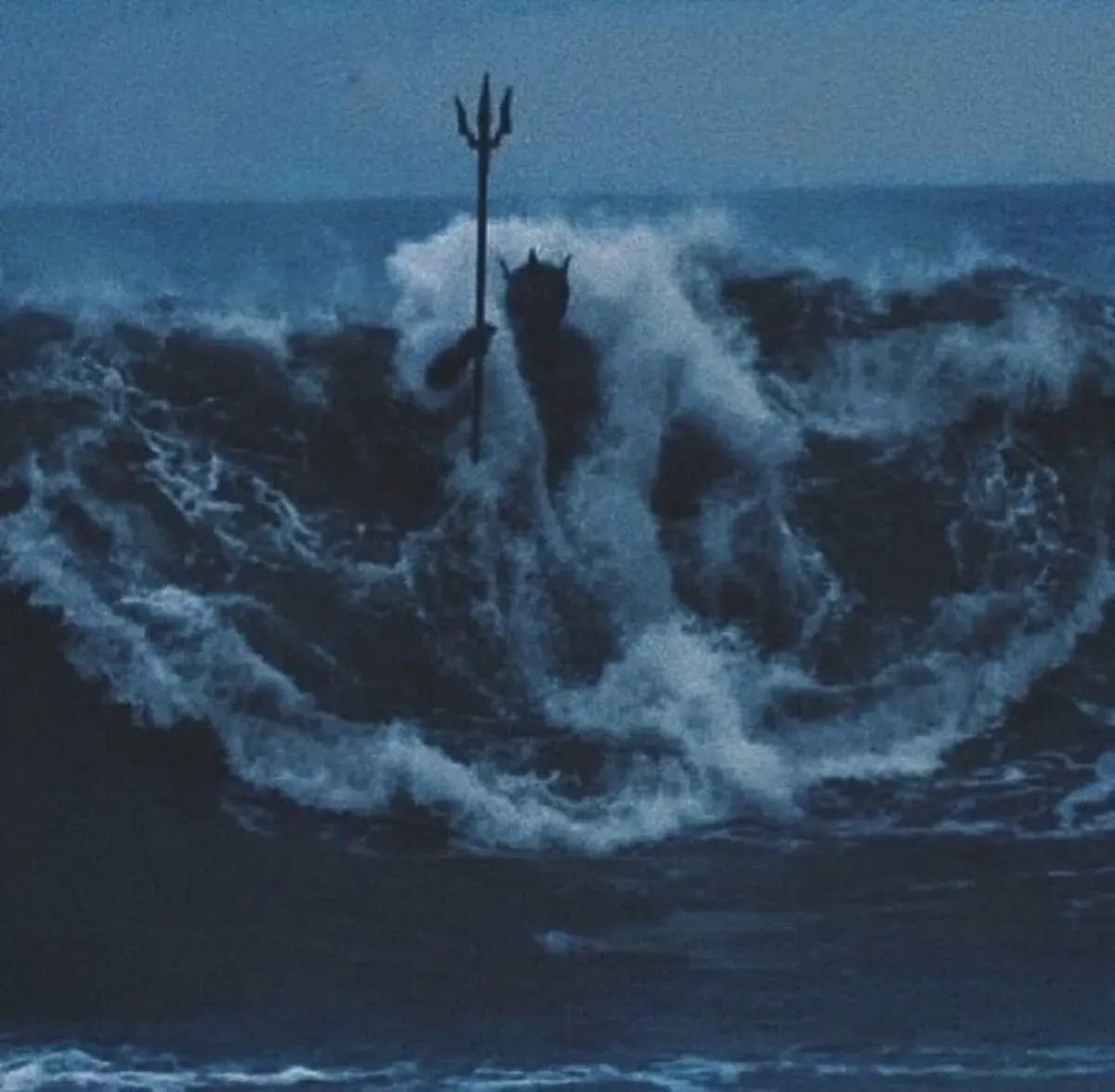
The movement within the physical layer, the climax of visceral and bodily feeling, can move you and your body through the frequencies backwards and forwards like a swinging movement without you even “knowing”. Low, deep end, rumble becomes the voice of a god.
You don’t have to see or hear Zeus or Poseidon speak to the audience to feel that something is divine, powerful. Power is first experienced physically and only then understood visually. And to make something feel physical in the movie theatre is with deep bassy movement.
The low frequencies are perfect for communicating an overwhelming force in a bodily way. They take me into Odysseus’ world. They make me feel what he feels. Fear. Danger. Scale. Weight. Presence.
When Christopher Nolan took us out on that ship, I wanted to be on that ship. And I was.
Sonic pressure and physical vibration aren’t simply sound effects, the physical vibration makes you experience an existence.
It is often talked about audiences watching movies. But the audience doesn’t just watch the image, you listen, and your body answers.
Is the perfect sound bass as a storytelling tool because I can make the body become the medium for the story?
Reason number one why I work in sound.
Till next week.
Sophie
Searching for the Perfect Sound is a weekly column by Sophie Kübler, here on NSNS Magazine. As a sound engineer and sound artist, my life revolves around sound, day in, day out. My thoughts and statements are therefore based on sound.


